Yesterday, out of curiosity, I Googled what people are reading these days.
The answer was too broad to be useful.
“People” covers a lot of people. And “reading” could mean a novel before bed, a news article during lunch or an exam guide with a deadline getting closer.
So I added age. What are different age groups reading?
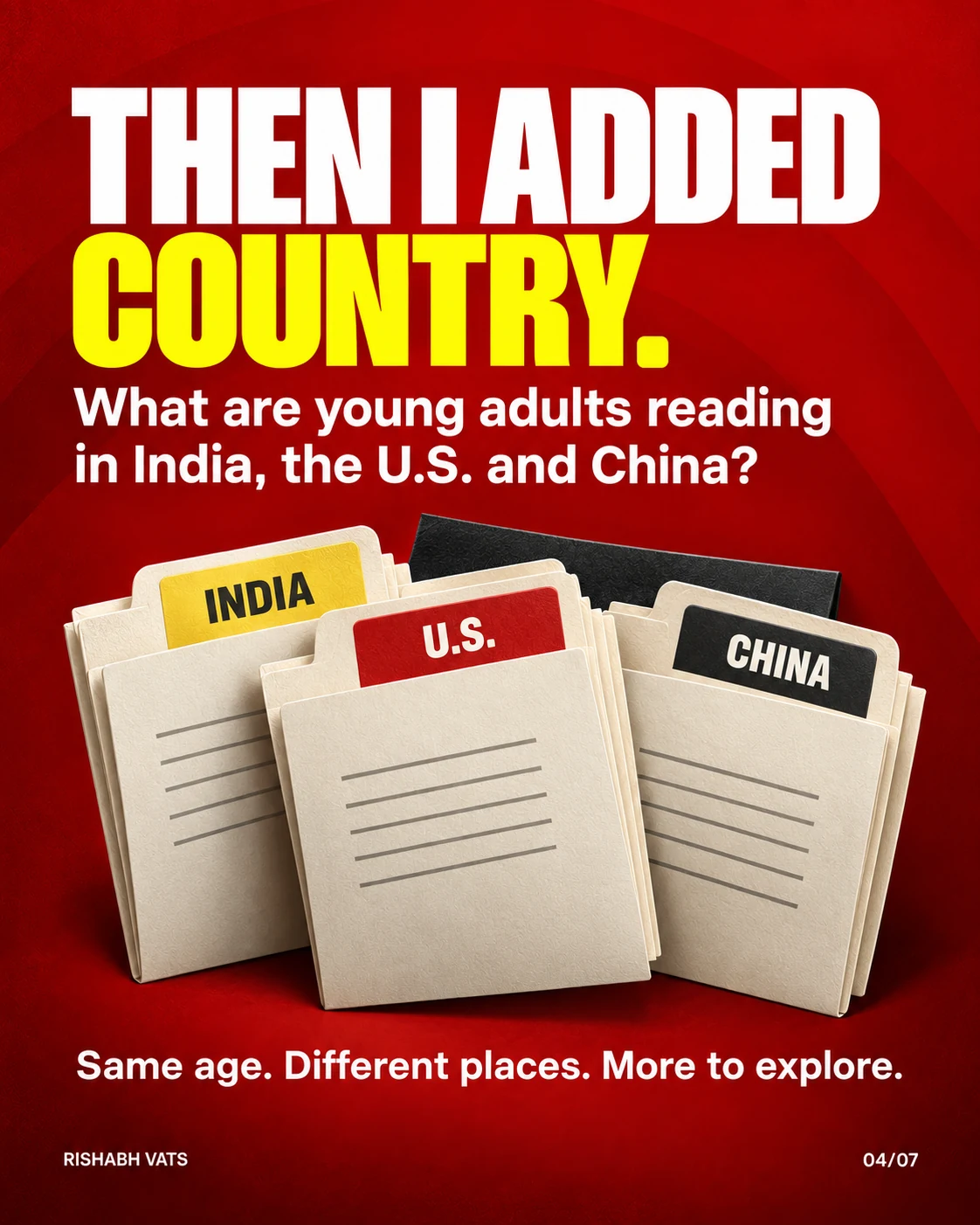
Then country. What are young adults reading in India, the U.S. and China?
The topic stayed the same. The questions started getting more interesting.
That small change led me into research on books, news and digital reading. Some of it confirmed that readers have different tastes. One finding caught me completely off guard.
The finding I kept coming back to
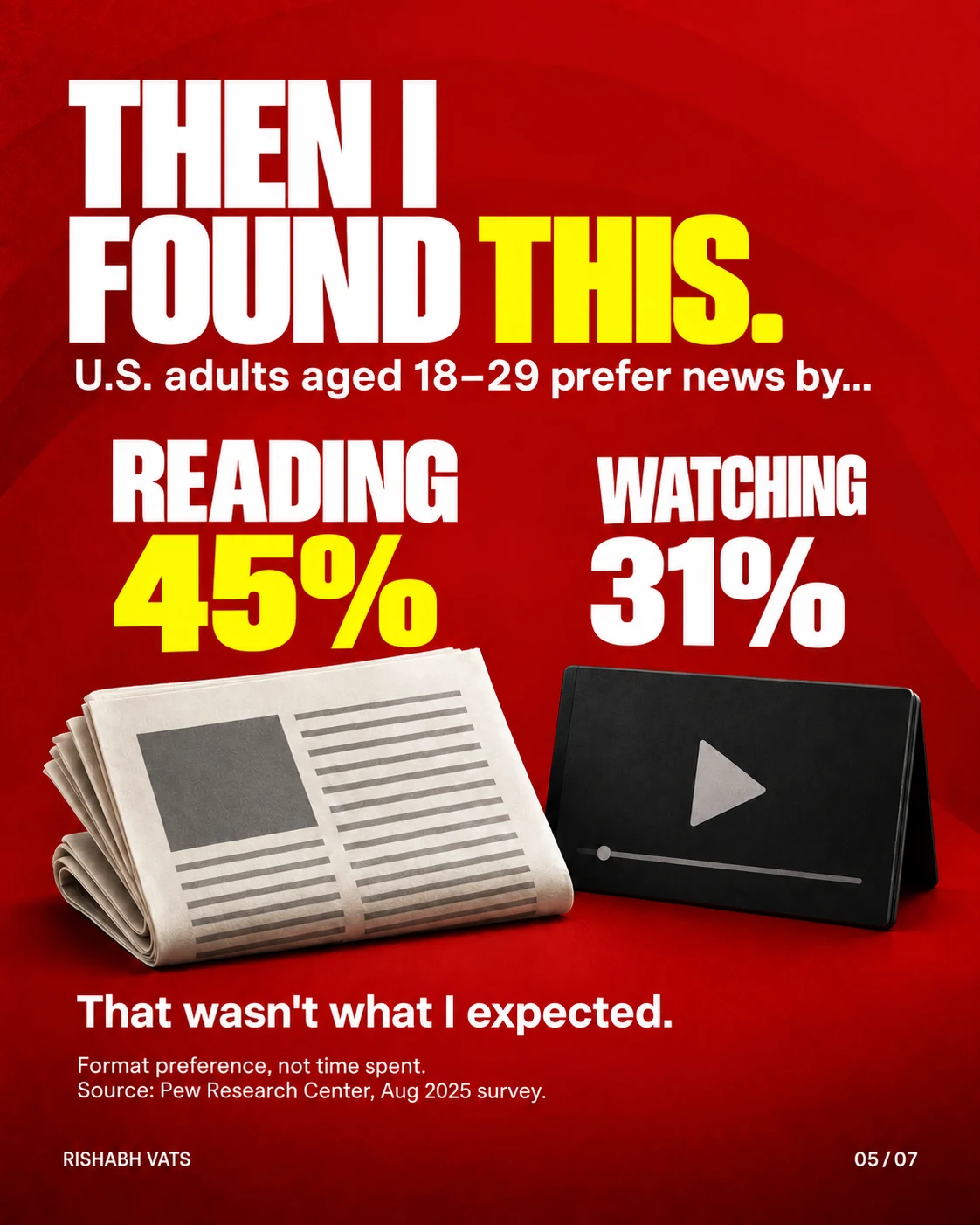
In an August 2025 Pew Research Center survey, 45% of U.S. adults aged 18–29 preferred reading news. 31% preferred watching it.
Reading was ahead of watching among the youngest adult group in the study. The question was about their preferred news format, rather than how much time they spent doing either. Pew Research Center.
That wasn't what I expected.
It made me curious about how often a broad impression of an audience hides something more interesting. Even the word “reading” was opening up: there was the subject people chose, and there was the way they wanted to take it in.
Age made one average look very different
A December 2025 YouGov survey offered a closer look at books. Across U.S. adults, 14% said they had read or listened to fantasy during that year.
Here is how that figure changed by age:
| Age | Read or listened to fantasy in 2025 |
|---|---|
| 18–29 | 21% |
| 30–44 | 16% |
| 45–64 | 14% |
| 65+ | 4% |
Those percentages cover all adults in each age group, including people who reported no reading. Respondents could choose more than one genre. YouGov, original survey tables, page 20.
The overall 14% had hidden quite a spread. The youngest group's reported share was more than five times the oldest group's.
There were still fantasy readers in every group. But the answer to my original question now had some shape: one genre, in one country, over one year, with a visible difference across ages.
That was much more interesting than another broad list of popular things to read.
Country brought different clues
Adding India and China made me curious about what else might change. The available research offered different pieces of the picture.
In India, Amazon's 2025 World Book Day release reported growth in literary fiction, self-help, business and children's books. Government-exam preparation materials had grown by more than 30%.
These are demand signals from Amazon India's platform, rather than a survey of every Indian reader. Amazon India.
The exam category made the original question feel quite different. Someone buying a story and someone preparing for an exam might both appear under “book readers,” while looking for very different things from the next page.
In China, the 2025 China Digital Reading Report, published in April 2026, described literary fiction as a broad e-book preference across ages. Fantasy and suspense/mystery continued to stand out as popular genres.
The report drew on more than 30,000 digital-reading users, alongside participating businesses and institutions. These findings describe preferences within that digital-reading research. Chinese Audio-video and Digital Publishing Association.
Fantasy appearing in both the U.S. and China was interesting, too. A more specific question can reveal shared interests as well as differences. I was curious about which stories travelled across audiences, and where local tastes began to matter.
There was one gap I couldn't honestly turn into a neat graphic: a matching age-by-country table.
The sources did not use the same age groups or measure the same activity. YouGov's published bands are 18–29, 30–44, 45–64 and 65+. Amazon reports customer demand. The public Chinese report does not give a numerical genre table for those same four groups.
So these are separate clues. They cannot tell us exactly what a particular age group in all three countries is reading on equal terms. The original question about young adults across countries remains partly open.
But it is a much more specific question to keep exploring.
I went a little deeper
What I enjoyed about this was how little I had to change at the start.
I began with a question about people. Adding age and country gave me something more concrete to look for. It also made the gaps clearer: what the research could answer, and what I was still curious about.
The topic hadn't changed. The question had.
That is what made segmentation feel interesting to me here. One extra detail changed the search enough to lead somewhere unexpected.
And now I'm curious about the next detail: what someone is hoping to get from the thing they're reading.