Skip to concept library
A field guide for marketers, junior to CMOMMXXVI

Marketing ideas · in context · in practice

The Marketing
Chronology

Follow 130 years of marketing from left to right, then explore 225 practical guides across strategy, sales, branding, growth and ten more domains. Built for curious beginners, working marketers and leaders who want the source, the mechanism and the application.

Explore the evolution →Browse 225 guides →Choose a reading path →

Layer 01 · The Evolution

From the mill floor
to the machine mind.

Ten chapters across roughly 130 years. Move from left to right through the eras marketers name and debate, from Keith's contested story to Kotler's Marketing 5.0. Every milestone links to its source.

Framework reference: PR Smith’s SOSTAC® Planning Methodology.

01 / 10
1890s –1900sPrehistory

Before the Discipline

Selling is ancient. In 1898, adman E. St. Elmo Lewis began articulating attention, interest and desire as a teachable sequence. Action completed the now-familiar AIDA model later.

REMEMBER THISEvery funnel you have drawn descends from an idea Lewis began articulating in 1898.
View 2 sourced milestones
1898

Elias St. Elmo Lewis begins articulating attention, interest and desire; action is added later to form the familiar AIDA sequence. [1]

1900s

Advertising trade press and the first agencies professionalize copywriting; 'scientific advertising' becomes an ambition. [2]

1900s –1920sMarketing 1.0 · product-centric

The Production Era

Factories were the heroes. The belief was simple: make a good product cheap enough and it sells itself. Marketing barely had a desk. (Historians dispute how neat these 'eras' really were; we flag that below.)

REMEMBER THISProduction era: 'a good product sells itself.'
View 2 sourced milestones
1960

Robert J. Keith names the eras retrospectively in 'The Marketing Revolution' (Journal of Marketing), describing Pillsbury's evolution from production-oriented firm onward. [1]

Contested: scholars such as Fullerton have challenged the eras narrative as too tidy, aggressive selling and demand creation existed throughout the industrial age. [2]

1920s –1950sMarketing 1.0 → 2.0

The Selling Era

Then factories made more than people wanted. Radio walked ads into living rooms, salesmen walked door to door, and the hard sell became a profession.

REMEMBER THISSelling era: 'we must sell what we make.'
View 2 sourced milestones
1920s–40s

In Keith's Pillsbury account, the company becomes sales-oriented: 'we must sell what we make', dealers, merchandising, and advertising move to the center. [1]

Mid-20th c.

BANT (Budget, Authority, Need, Timeline) is commonly associated with IBM enterprise selling. Practitioner histories often cite the 1950s, but a definitive public original manual or inventor is not established. [2]

1950s –1960sMarketing 1.0 codified

The Marketing Concept

The big bang. In one decade marketing got its vocabulary: segmentation (1956), the 4Ps (1960), 'Marketing Myopia' (1960), Kotler's textbook (1967). The radical new rule: start with the customer, not the factory.

REMEMBER THISThe 1960s named everything, and put the customer first.
View 5 sourced milestones
1956

Wendell Smith distinguishes product differentiation from market segmentation in the Journal of Marketing, the seed of STP. [1]

1960

E. Jerome McCarthy compresses Borden's twelve-ingredient 'marketing mix' into the 4Ps in Basic Marketing. [2]

1960

Theodore Levitt's 'Marketing Myopia' (HBR) tells railroads they were in the transportation business all along. [3]

1960

Keith declares the 'marketing revolution': the customer, not the company, at the center of business. [4]

1967

Philip Kotler publishes Marketing Management, the field's defining textbook, now in its 16th edition. [5]

1970s –1980sMarketing 2.0 · consumer-oriented

The Battle for the Mind

Too many ads, too little mind. Ries and Trout said the real fight is not on the shelf, it is inside the buyer's head: own one word, one rung, one position.

REMEMBER THISPositioning: win a slot in memory, not just space on shelves.
View 5 sourced milestones
1972

Ries & Trout publish 'The Positioning Era Cometh' in Advertising Age; the 1981 book sells millions. [1]

1979

Michael Porter's five forces (HBR) give marketers a structural view of competition. [2]

1981

Booms & Bitner extend the mix to 7Ps for services: People, Process, Physical Evidence. [3]

1983

Levitt's 'The Globalization of Markets' ignites the standardize-vs-adapt debate; Ogilvy on Advertising canonizes the Big Idea. [4]

1984

Cialdini's Influence distills persuasion into teachable principles, reciprocity to scarcity. [5]

1983 –1990sToward Marketing 3.0

The Relationship Turn

The sale stopped being the finish line. Berry named relationship marketing in 1983, brands became measurable assets, and keeping a customer became strategy, not courtesy.

REMEMBER THISThe sale is the start of the relationship, not the end of it.
View 5 sourced milestones
1983

Leonard Berry coins 'relationship marketing' at the AMA services conference: attract, maintain, enhance. [1]

1988

Neil Rackham's SPIN Selling (built on analysis of 35,000 sales calls) professionalizes complex selling. [2]

1991

David Aaker's Managing Brand Equity defines the brand as an asset with five components. [3]

1993

Kevin Lane Keller's customer-based brand equity model; Schultz et al. publish the first IMC textbook at Northwestern. [4]

1996

At PTC, Dunkel and Napoli codify MEDDIC for enterprise deal qualification. [5]

1994 –2004The channel revolution

The Digital Disruption

On October 27, 1994, a banner on HotWired asked for the first click, and advertising found a new continent. Six years later Google turned search intent into an auction.

REMEMBER THIS1994: attention became clickable, and finally measurable.
View 7 sourced milestones
1978

Prehistory: DEC's Gary Thuerk sends the first mass marketing email to 397 ARPANET addresses, reportedly generating millions in sales, and the first spam complaint. [1]

1990s

PR Smith develops SOSTAC® Planning, connecting situation, objectives, strategy, tactics, action and control. [6]

1994

The first banner ads go live on HotWired.com; AT&T's 'Have you ever clicked your mouse right here? You will' records a click-through rate legendary today. [2]

1999

Alan Cooper introduces personas in The Inmates Are Running the Asylum, user archetypes enter marketing's toolkit. [3]

2000

Google launches AdWords (October 23) with 350 advertisers; keyword auctions become a $60B+ business. [4]

c. 2000

PR Smith develops the 5Ss of digital marketing: Sell, Serve, Speak, Save and Sizzle, extending goals beyond sales alone. [7]

2003

ITSMA's Bev Burgess codifies account-based marketing; Reichheld publishes the Net Promoter Score in HBR. [5]
2004 –2015Marketing 3.0 · human-centric (2010)

Social, Inbound & the Growth Mindset

The audience got a printing press. Brands now had to earn attention with content and community instead of renting it, and startups turned marketing into weekly experiments called growth.

REMEMBER THISEarn attention, don't rent it. And measure everything.
View 7 sourced milestones
2004–06

The social platforms arrive; HubSpot is founded on the wager that helpful content beats interruption ('inbound marketing'). [1]

2007

Dave McClure's 'Startup Metrics for Pirates' gives startups AARRR: five stages that matter. [2]

2009

McKinsey replaces the funnel with the consumer decision journey; Sinek's 'Start With Why' TEDx talk begins its run to tens of millions of views. [3]

2010

Kotler's Marketing 3.0 declares values-driven, human-centric marketing; Byron Sharp's How Brands Grow counters with evidence: penetration beats loyalty. [4]

2010

Sean Ellis coins 'growth hacker'; Brinker's first martech supergraphic (2011) charts ~150 tools, the count later passes 15,000. [5]

2010

A published PR Smith lecture documents the Ladder of Engagement and collaborative co-creation. This is evidence of use, not a claimed invention date. [7]

2013–14

Binet & Field publish The Long and the Short of It (60:40); Dietrich's PESO model reorganizes PR; Berger's Contagious decodes sharing. [6]

2015 –2021Marketing 4.0 · traditional→digital (2016)

Data, Platforms & the Privacy Reckoning

Marketing became software: thousands of tools, attribution models, always-on testing. Then GDPR (2018) and Apple's tracking prompt (2021) pulled the rug, and measurement had to grow up without spying.

REMEMBER THISPrivacy reset the game: own your data, prove your impact.
View 5 sourced milestones
2015

Google's micro-moments frame intent-rich mobile instants as the new battleground. [1]

2016

Kotler's Marketing 4.0 maps the traditional-to-digital transition; Christensen's 'Jobs to Be Done' lands in HBR. [2]

2018

GDPR takes effect May 25; HubSpot retires the funnel for the flywheel; Reforge argues growth loops beat funnels. [3]

2020

Kohavi, Tang & Xu publish Trustworthy Online Controlled Experiments, the A/B testing canon. [4]

2021

Apple's App Tracking Transparency (iOS 14.5, April 26) makes tracking opt-in; the 95:5 rule reframes B2B advertising; McKinsey quantifies the personalization premium. [5]

2021 → nowMarketing 5.0 · technology for humanity (2021)

The AI-Native Era

Kotler named it Marketing 5.0 before the tools landed. Then ChatGPT arrived in November 2022 and drafts became free: research, copy, analysis in seconds. The moat machines cannot supply: taste, judgment, strategy.

REMEMBER THISAI writes the drafts. Marketers keep the judgment.
View 4 sourced milestones
2021

Kotler, Kartajaya & Setiawan publish Marketing 5.0: Technology for Humanity (Wiley). [1]

2022

ChatGPT launches November 30, reaching ~1M users in five days, generative AI enters every marketing workflow. [2]

2025

Google open-sources Meridian, its Bayesian marketing-mix model, privacy-era measurement goes mainstream. [3]

Now

Emerging practice (still unsettled): AI answer-engine optimization, synthetic research panels, agent-assisted buying, and always-on experimentation. [4]

Swipe or scroll left to right

Epilogue · Why This Matters Now

The tools are brand new.
The questions are a century old.

Every prompt is a brief. Every AI output you approve is a positioning, pricing or persuasion decision. Faster execution makes judgment more valuable, and these ideas give that judgment a foundation.

Explore all 225 concepts →

Interlude · The People

Hall of Fame

The minds behind the map. Swipe through. Photographs are free-licensed or public-domain (Wikimedia Commons, credited on-card); where none exists, an intentional editorial nameplate stands in.

The Funnel's Father

E. St. Elmo Lewis

1872–1948

Advertising advocate who began articulating attention, interest and desire in 1898. Action was added later, forming the AIDA model that influenced funnel thinking.

Scientific Advertising

Claude C. Hopkins

1866–1932

Copy pioneer whose 1923 book Scientific Advertising made testing, coupons, and measured response the craft's first discipline, still cited by Ogilvy as required reading.

The Myopia Cure

Theodore Levitt

1925–2006

Harvard economist who told railroads they were in transportation ('Marketing Myopia', 1960) and later lit the globalization debate (1983). Defined marketing as seeing through the customer's eyes.

Services Get a Mix

Booms & Bitner

7Ps, 1981

Bernard Booms and Mary Jo Bitner extended the 4Ps with People, Process, and Physical Evidence, giving services marketing its own operating kit.

The Relationship Turn

Leonard Berry

b. 1942

Coined 'relationship marketing' at the AMA's 1983 services conference (attract, maintain, enhance) resetting marketing's clock from the transaction to the lifetime.

SOSTAC® Planning

PR Smith

SOSTAC®, 1990s

Marketing author and creator of SOSTAC® Planning and the 5Ss of digital marketing. His work also includes TOPPP SEED strategy prompts and the Ladder of Engagement.

Portrait of Seth Godin

Permission & Remarkability

Seth Godin

b. 1960

Entrepreneur, author, and speaker, among the most-read voices of internet-era marketing, arguing attention must be earned, not interrupted.

Positioning, Operationalized

April Dunford

b. 20th c.

Obviously Awesome (2019) turned positioning from art into a repeatable process (five components, run in order) adopted across the tech industry.

Interlude

History gave marketing its ideas.
Explore a selection with context and application.

Guided reading

Start with the decision in front of you.

Three ways through the library. Follow a sequence or open the guide you need.

  1. 01 · Strategy

    Build a marketing plan

    Move from evidence about demand to a focused set of decisions.

    1. Product-Market Fit Check the evidence that customers find lasting value.
    2. SWOT Analysis Separate supported priorities from assumptions.
    3. Marketing Plan Turn those priorities into actions and controls.

    Leave withA plan with priorities, owners, budget and review points.

  2. 02 · Branding

    Diagnose brand strength

    Understand what the brand owns in customers' minds and where it can improve.

    1. Aaker's Brand Equity Model Identify the assets and liabilities to investigate.
    2. Perceptual Mapping Compare customer perceptions with relevant alternatives.
    3. Differentiation Choose a meaningful difference the offer can support.

    Leave withAn evidence-led diagnosis and a direction worth testing.

  3. 03 · Sales

    Qualify an opportunity

    Connect customer fit, buying evidence and a useful next conversation.

    1. Ideal Customer Profile Define which accounts are a credible fit.
    2. BANT Qualification Explore budget, authority, need and timing.
    3. Lead Qualification Record the evidence, gaps and agreed next step.

    Leave withA reasoned decision to progress, nurture or disqualify.

Layer 02 · The Concept Library

Find a framework. Understand its limits.

225 guides connect definitions and original sources with worked examples, practical checklists and limitations. Open a concept for a quick explanation, then follow its full guide. Choose a domain or press / to search.

Browse all 14 topic areas
Browse all 225 concept guides
Strategy27 conceptsBranding19 conceptsAdvertising17 conceptsSales16 conceptsPerformance18 conceptsDigital25 conceptsResearch20 conceptsPR & Comms12 conceptsProduct Mktg13 conceptsGrowth13 conceptsCRM & Loyalty14 conceptsAnalytics12 conceptsB2B & ABM11 conceptsGlobal8 conceptsMarketing225 CONCEPTS14 DOMAINS

Layer 03 · Learn From the Field

The case-study shelf.

Concepts stick when you watch them win or fail in the real world. A curated, link-verified shelf of the internet's best free case studies (Indian and global), each tagged to the domains it teaches. Everything links out to the original creators; thumbnails and titles remain theirs.

India

Think School

How Amul beat its competition & thrived through lockdown

Cooperative economics + one of the world's longest-running brand campaigns.

BrandingStrategyGlobal
India

Think School

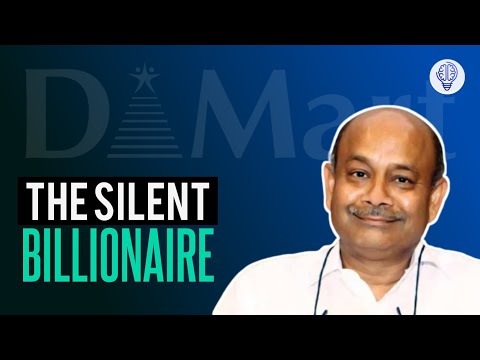
How DMart's business strategy made the Retail King of India

Everyday-low-price positioning, working-capital genius, disciplined expansion.

StrategyCRM & Loyalty
India

Think School

JioMart vs DMart, India's most epic retail war

Platform power vs. retail fundamentals, five forces in the wild.

StrategyDigital
India

Think School

Will ONDC kill Zomato & Swiggy?

Open networks vs. aggregator moats, a live disruption case.

DigitalStrategy
India

Think School

Zomato's secret plan to become profitable, Hyperpure

B2B supply-side flywheel hiding inside a consumer brand.

GrowthB2B & ABM
India

The Valuation School

How Zudio plans to grow 10x, Trent case study

Value-fashion positioning, store economics, and disciplined scaling.

StrategyProduct Mktg
Global

MagnatesMedia

How a kid with $0 created Nike

Distinctive assets, athlete endorsement, and brand story-building at its best.

BrandingProduct Mktg
Global

ColdFusion

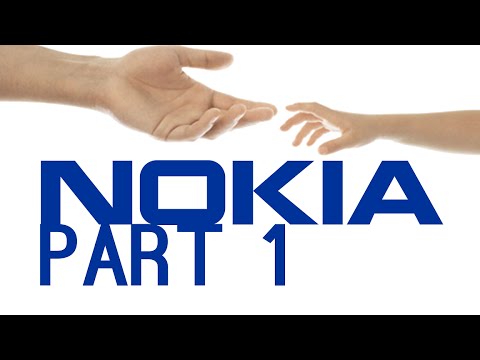
Nokia, The Rise and Fall (Part 1)

Marketing myopia in real time: owning a category and losing the job-to-be-done.

StrategyResearch
Global

ColdFusion

The Rise and Fall of BlackBerry

Chasm dynamics: loved by early adopters, out-positioned in the mainstream.

Product MktgStrategy
Global

Company Man

The Decline of Blockbuster… What Happened?

The canonical disruption story, late fees vs. lifetime value.

StrategyCRM & Loyalty
Global

Acquired

Costco, the Acquired deep-dive

Loyalty economics as strategy: membership, trust, and ruthless simplicity.

CRM & LoyaltyStrategy
Global

London Business Forum

Philip Kotler, Marketing and Values (London Business Forum)

The field's defining author, on stage: CCDVTP and where marketing is heading.

StrategyBranding

The quality wall

Channels and series whose bar stays high, subscribe to these and the algorithm educates you for free.

Think SchoolIndia's benchmark for business case-study storytelling.MagnatesMedia'Netflix for entrepreneurs', cinematic brand and business stories.ColdFusionMeasured, documentary-grade rises and falls of tech brands.AcquiredLong-form company histories, strategy, moats, and lore.Slidebean, Company ForensicsStartup post-mortems with founder-level candor.Company ManCrisp what-happened breakdowns of familiar brands.Business of Software TalksPractitioner talks, including April Dunford on positioning.

Appendix · Sources & Method

References (121 verified sources)

Method. Every named framework, date, and attribution on this page was checked against a live source before publication, and every link below was verified to exist at build time. Where a specific deep link could not be confirmed, we cite the canonical publisher or topic page instead. No statistics were invented; where history itself is disputed, like the tidy "production → selling → marketing" eras narrative, the dispute is stated rather than smoothed over.

All timeline illustrations are original artwork drawn for this chronology; no stock or archival imagery is used.